Posts

What is Gestational Surrogacy?

Image
  When a woman is unable to carry a baby due to physiological restrictions, she may use a gestational surrogate (GS) . The IVF clinic needs to be intimately involved and familiar with the process in order to manage a donor/surrogate cycle effectively. We work closely with a number of established egg donor/surrogacy agencies and can provide referrals. With gestational surrogacy, one or more embryos derived from the patient’s eggs and her partner’s sperm is transferred into the uterus of a surrogate. The surrogate in effect provides a host womb but does not contribute genetically. In spite of original ethical, moral, and medical-legal reservations, gestational surrogacy has now gained widespread social acceptance. Candidates for IVF surrogacy can be divided into two groups: Women that do not have a uterus capable of carrying a pregnancy to term Women who cannot safely undertake a pregnancy because of medical conditions or illnesses How Does Gestatio...


National Infertility Awareness Week (NIAW)

Image
National Infertility Awareness Week (NIAW) is a time to raise awareness about the challenges of infertility and to provide support to couples who are struggling to conceive. This year’s NIAW is April 23-29, 2023. How do couples facing infertility find encouragement? First, it is important to remember that you are not alone. Infertility affects an estimated 1 in 8 couples in the United States. This means that there are millions of people who understand what it is like to struggle to conceive. There are many resources available to help you, including support groups, online forums, and counseling services.   Second, it is important to stay positive. Infertility can be a very difficult and emotional journey, but it is important to remember that there is hope. With the help of medical treatment and support, many couples are able to achieve their dream of having a family. Finally, it is important to celebrate the small victories. Even if you are not yet pregnant, there are many thi...

The Importance of a Heart Healthy Lifestyle When Infertile

Image
  Finding out you have infertility can be a blow to anyone. Knowing that your plans of how you would build your family will need to change, that you’ll likely need to undergo the stress of treatment, can be overwhelming. But for those struggling with infertility, there are other concerns to take into account – namely, heart disease. While heart disease and infertility may not seem related at first glance, there is a strong correlation between those who struggle with infertility and then go on to develop heart disease later in life. But what are the connections between heart disease and infertility? Here, Dr. Walid Saleh, fertility specialist at SIRM Dallas in Dallas, Texas discusses the underlying link between heart disease and infertility and how those struggling with infertility can minimize their chances of developing heart health issues later on. Getting the Full Picture In some cases, infertility is caused by an underlying health issue and can signal a predisposition to ...

How common are twins after fertility treatments?

Image
When faced with fertility struggles, some couples think they’d like to have “two at once” by hoping/aiming for a twin pregnancy. This possibility stands out in many people’s minds from celebrities and friends who have had twins after fertility treatments – and it is true that many fertility treatments increase the chance a couple will have twins. While the chance of twins is 1% in pregnancies conceived at home without interventions, almost every fertility treatment has a higher chance than that. However, while twins look cute in Christmas cards and may seem like a time- and cost-efficient way to achieve your desired family size, it isn’t as simple or desirable as it may sound. How common are twins after fertility treatments? The likelihood of twins depends on several factors, but primarily the treatment that a couple uses for conception. If a couple uses pills by mouth to augment egg release (either clomid or letrozole for “ovulation induction/stimulation”), the simplest medical approa...

What Is a Reproductive Endocrinologist (REI) ? Unlock the Secrets to Fertility Treatments!

Image
  Are you looking to get pregnant but feeling overwhelmed by the process? A Reproductive endocrinologist can help. Reproductive Endocrinologists are medical professionals specializing in hormone-linked conditions that affect fertility can be incredibly useful. Discovering the part an endocrinologist plays in fertility treatments, searching for a reliable one, and getting ready for your appointment can be challenging – this blog post will give you all the information necessary to make the right decision This blog post will provide you with information on the role an endocrinologist plays in fertility treatments, how to find a reliable one, and how to prepare for your appointment. What is a Reproductive Endocrinologist? A medical endocrinologist is a doctor who specializes in diagnosing and treating disturbances of hormones. Medical endocrinologists take care of hormonal issues related to metabolism, such as diabetes and thyroid problems. On the other hand, reproductive endocrino...

Fertility Access Program - Center for Reproductive Endocrinology

Image
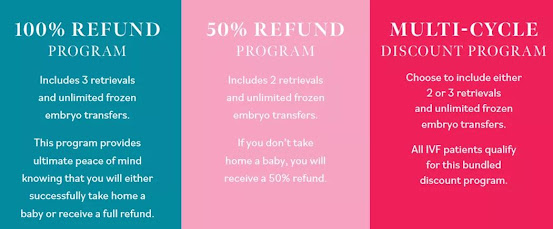
Fertility Access Program We believe that every person should have the opportunity to pursue their dream of parenthood. With Fertility Access, you have the peace of mind knowing that  80% of participants take home a baby .   4 Reasons to Choose Fertility Access Easy access. Fertility Access makes paying for IVF treatment simple and stress-free, so you can focus on building you family.   Track record of success. 80% of patients who complete the program take home a baby.     Peace of mind. With the cost of treatment taken care of, you can focus on what’s most important – building your family! You save money. By bundling your IVF cycles with a Fertility Access program, you can save up to 40% on your treatment costs. Ready? Connect with Fertility Access to learn more. The Fertility Access program is designed to give you peace of mind throughout your fertility journey. Call  1-800-USF-9203 ...

Fertility Preservation After Illness in Dallas, Texas

Image
  As the success rates for cancer treatments continue to rise, more and more patients are living long, active lives. While cancer treatments have allowed patients to survive at higher rates, they also can have a negative impact on fertility. Fertility Preservation for Women Before Cancer Treatment Chemotherapy and radiation have both been shown to negatively affect the fertility of both men and women, often damaging eggs and possible leaving the woman infertile. Freezing a woman’s eggs, or embryos created using sperm from her partner or an anonymous donor, can provide women with the chance to have a biological child in the future. Fertility Preservation Process: Fertility specialists of CRE (previously SIRM-Dallas) will induce the maturation of the eggs and retrieve them as would be done for an IVF cycle If the patient does not have a partner, or would prefer not to use donor sperm, we would then freeze her eggs through a process called vitrification...